End User Computing in 2026: A Market at a Turning Point

One year ago, I wrote that End User Computing was entering a new era. Twelve months later, I believe we have crossed the tipping point.
For years, End User Computing (EUC) was often considered a mature discipline. Organizations focused on deploying Windows images, managing devices, patching operating systems, and delivering applications. Innovation certainly happened—with VDI, DaaS, SaaS, Unified Endpoint Management, Zero Trust, and Digital Employee Experience—but the endpoint itself remained largely unchanged.
2025 and the first half of 2026 have fundamentally altered that perception.
Today, the endpoint sits at the intersection of cybersecurity, artificial intelligence, operational resilience, regulatory compliance, sustainability, user experience, and cost optimization. Decisions that once belonged solely to desktop engineering teams are now discussed in boardrooms.
This is no longer about managing PCs. It is about controlling the digital workspace.
A market that continues to grow
Despite predictions that endpoint management would become a commodity, the opposite is happening. Analysts estimate the global End User Computing market will exceed $16 billion in 2026, with annual growth expected to remain close to double digits throughout the decade.
Why? Because every major transformation initiative eventually lands on the endpoint.
Cloud migration. Hybrid work. Zero Trust. Digital Employee Experience. Artificial Intelligence. Operational resilience.
They all require rethinking how users securely access digital resources.
The endpoint has become the control point of the digital enterprise.
Windows 10 wasn’t just an operating system lifecycle
October 2025 marked the end of Windows 10 support. For many organizations this was initially viewed as another mandatory hardware refresh. In reality, it triggered a much deeper discussion.
Should every employee continue receiving a full Windows PC? Does every workload require a local operating system? Can organizations continue replacing perfectly functional hardware every four or five years? Can endpoint security continue relying on adding yet another security agent?
For many organizations, the answer is increasingly no.
Instead of refreshing everything identically, enterprises are beginning to segment users based on actual business needs.
Knowledge workers. Task workers. Healthcare professionals. Industrial operators. Shared devices. Privileged administrators.
Each persona now deserves a different workspace architecture.
Security became the biggest EUC driver
If one topic dominated 2025, it was cybersecurity. Cybercrime has become an industrialized business. According to IBM, the average global cost of a data breach reached approximately USD 4.9 million. Healthcare continues to experience the highest financial impact, with average breach costs exceeding USD 9 million.
The Verizon 2026 Data Breach Investigations Report highlights another important evolution:
- Around 60% of breaches still involve a human element.
- Vulnerability exploitation has overtaken credential theft as one of the primary initial access vectors.
- Ransomware remains involved in roughly one-third of analyzed breaches.
These statistics reinforce an uncomfortable reality. Attackers are no longer targeting only infrastructure. They target identities.
Browsers. Remote sessions. Administrative workstations. Cloud applications.
The endpoint has become the preferred gateway into the enterprise. Consequently, security strategies are shifting from simply protecting devices toward reducing the endpoint attack surface altogether. Sometimes the safest endpoint is not the one with the most security software. It is the one that exposes the least functionality to attackers.
Regulations are changing endpoint priorities
Europe has entered a new regulatory era. NIS2, DORA and the Cyber Resilience Act all introduce a common expectation:
- Organizations must demonstrate resilience—not merely prevention.
- This changes the role of End User Computing.
- The workstation is no longer just an employee productivity tool.
- It becomes an operational resilience platform.
- Can employees continue working during ransomware?
- Can privileged administrators access infrastructure securely during a crisis?
- Can hospitals continue delivering care if Windows endpoints become unavailable?
- Can industrial operators maintain production despite cyber incidents?
These questions increasingly drive endpoint architecture decisions.
Hardware economics are changing
Hardware has quietly become another strategic discussion. Windows refresh programs, memory shortages, AI-capable hardware demand and supply chain pressure have increased infrastructure costs. At the same time, organizations face growing sustainability commitments. Replacing every endpoint every four years is becoming difficult to justify—both economically and environmentally.
This explains why hardware lifecycle extension, lightweight operating systems, repurposing existing devices and cloud-delivered workspaces are becoming mainstream discussions.
The cheapest endpoint is often the one you don’t need to replace.
Digital Employee Experience becomes measurable
For years, endpoint teams measured success using technical indicators.
Patch compliance. Inventory accuracy. Ticket closure. These metrics remain important—but they no longer define success. Employees judge IT by experience.
How long does login take? How quickly are applications available? How reliable is collaboration? Can they recover quickly after an incident?
Digital Employee Experience has therefore evolved from a monitoring discipline into an architectural principle. A poor architecture inevitably creates poor user experience. Poor user experience inevitably creates shadow IT.
Shadow IT inevitably creates security risks.
Artificial Intelligence changes everything—again
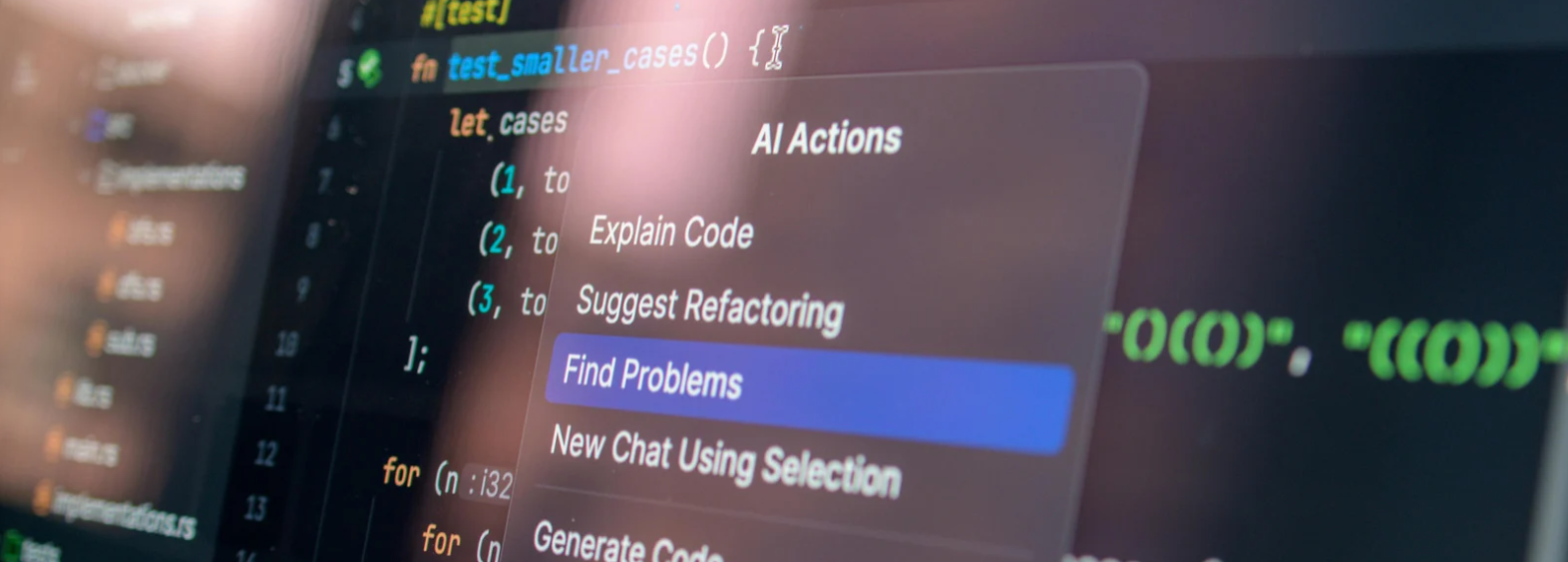
AI is reshaping End User Computing from multiple directions simultaneously. Organizations are deploying AI assistants inside Microsoft 365, Google Workspace, ServiceNow, Salesforce and countless SaaS platforms. Meanwhile, AI-capable PCs equipped with NPUs are entering enterprise refresh cycles.
The important question is therefore no longer: “Should we adopt AI?”
Instead, it becomes: “Where should AI execute?”
Locally? Inside the browser? Inside virtual desktops? Inside SaaS applications? Within enterprise AI platforms?
The answer depends entirely on workload sensitivity, compliance requirements and user personas. AI makes endpoint architecture more important – not less.
The browser becomes the new operating system
An increasing percentage of enterprise applications are now delivered through browsers. For many employees, the browser has effectively become their primary workspace. This evolution creates both opportunities and challenges. If the browser becomes the workspace, it also becomes one of the most attractive attack surfaces.
Enterprise Browser technologies, browser isolation, session protection and identity-aware browsing are therefore emerging as strategic components of modern EUC architectures.
IT and OT are finally converging
Another trend that deserves far more attention is the convergence of traditional office IT with operational environments.
Hospitals. Factories. Airports. Utilities. Transportation. Manufacturing.
These environments require shared devices, long hardware lifecycles, legacy applications, specialized peripherals and extremely high availability. For them, endpoint resilience is directly linked to business continuity. A workstation failure is no longer merely an IT incident.
It may delay patient care. Interrupt industrial production. Impact transportation. Prevent critical infrastructure from operating safely.
Looking ahead: the challenges of 2026–2027
The coming years are unlikely to bring incremental change. Instead, several structural transformations are already emerging.
AI-assisted cyberattacks will become commonplace, forcing defenders to adopt AI at the same pace.
Identity will become the primary security perimeter, replacing traditional network-centric thinking.
Enterprise Browsers will increasingly evolve into security platforms rather than simple application launchers.
Secure Administrative Workstations and isolated privileged environments will become standard practice across critical industries.
Operational resilience will become a measurable KPI alongside traditional endpoint compliance.
Finally, segmentation will move directly onto endpoints, using virtualization, containers and hardware-assisted isolation to separate privileged administration, office productivity, browsing, operational technology and AI workloads—even on a single physical device.
These are not isolated trends. Together, they represent the next evolution of End User Computing.
My perspective
For almost two decades, End User Computing focused on productivity.
The next decade will focus on resilience.
Organizations will no longer evaluate endpoint platforms solely by the applications they can launch. They will evaluate them by their ability to reduce cyber risk, recover rapidly after incidents, extend hardware lifecycles, support regulatory compliance, integrate AI securely and deliver a consistent employee experience.
The endpoint is no longer simply where users work. It has become one of the most strategic control points of the digital enterprise. And perhaps the most exciting aspect is that this transformation is only beginning.
Over the coming months, I’ll publish a dedicated series of articles exploring each of these topics in depth from AI-powered workspaces and Enterprise Browsers to operational resilience, endpoint segmentation, hardware lifecycle extension, secure administrative workstations, Digital Employee Experience, and the future role of the endpoint in a Zero Trust world.
Because understanding where EUC is heading is important. Understanding how to prepare for it is where the real value begins.
Share this content: